
Exploring the Lourens River, Cape Town
Photographing the Underwater Inhabitants (December 2024/January 2025)

It was when taking the dog to Radloff Dog Park in Somerset West that I first came upon the Lourens River, a 23km long river running from the mountains into False Bay. Whilst seeing the dog play in the water, I noticed a trout (an invasive species) and wondered what else could be found in this part of the river. So next time we came, I kitted up in my wetsuit with camera in hand, whilst my partner and the dog scurried away to avoid being seen with me, the lunatic with his camera going into the river. From the number of people who checked that I was alive when I was in the river, this action may have some justification.
The water when I did my exploring was quite pleasant, as it was summertime. I knew that there were trout, but was hoping to find more native animals, crabs and fish. Which is exactly what I managed to do. Almost as soon as I got into the water, I found crabs! Cape river crabs (Potamonautes perlatus), to be exact. They were quite skittish, and I had my wide lens on, so I needed to sneak very carefully and compose shots that would look good, making the dark crab stand out in a tea coloured river is not the easiest thing, but thankfully, I did have a strobe.
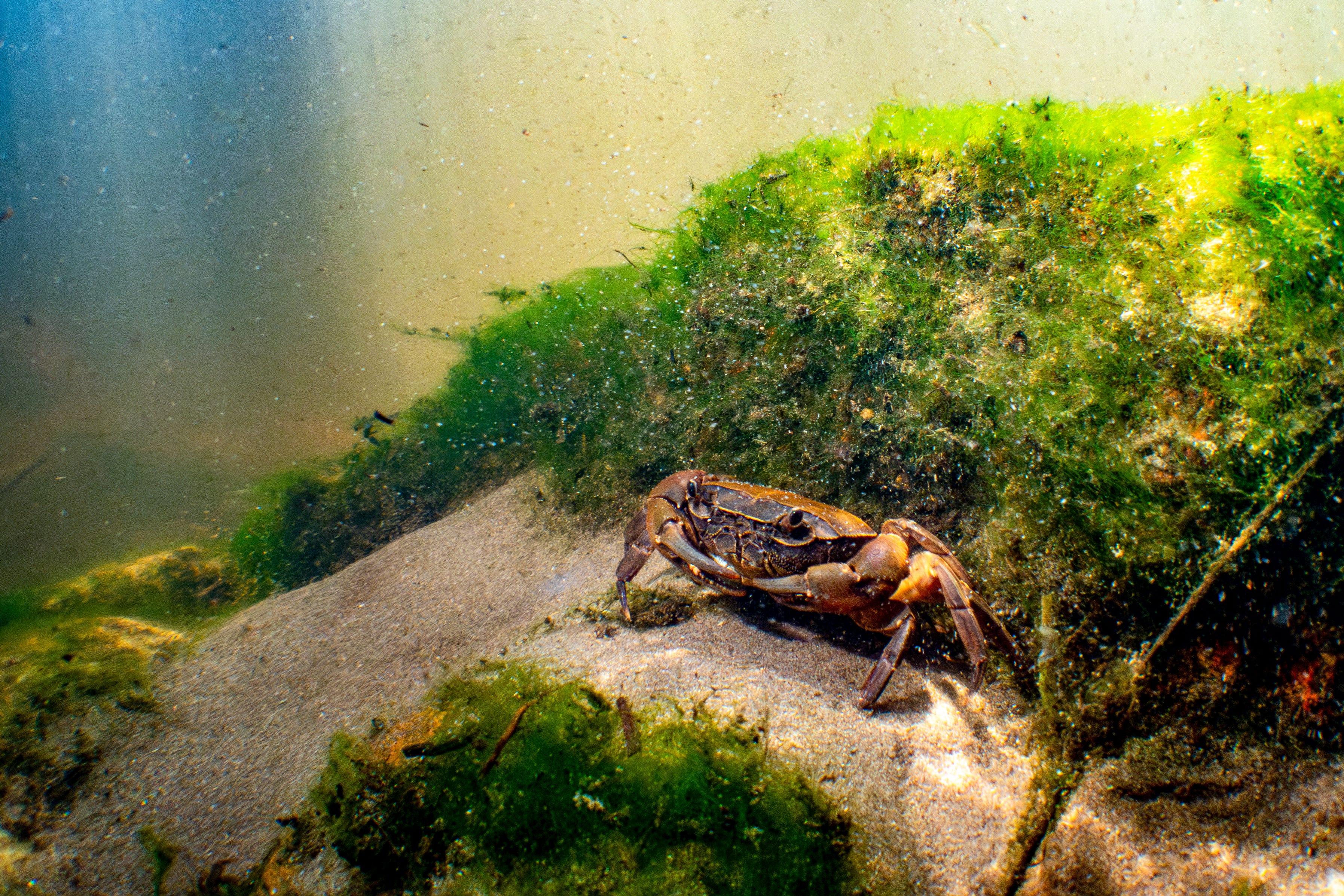
It was the only decent shot I managed to get that day, and I was told my time for swimming in the river was up as we had to get back home to feed the birds.
The next expedition was macro-focused. I was hoping for some close-up shots of the crabs, maybe even fish, and any insects I could find. I was hoping for frogs but knew that that was unlikely. With a bit more patience, I managed to creep very, very slowly up to some crabs, but often as I double check that I can see them on my camera, they would disappear, never to be seen again. Eventually, after 30 minutes of stalking, one was polite enough to let me get a close-up of it.
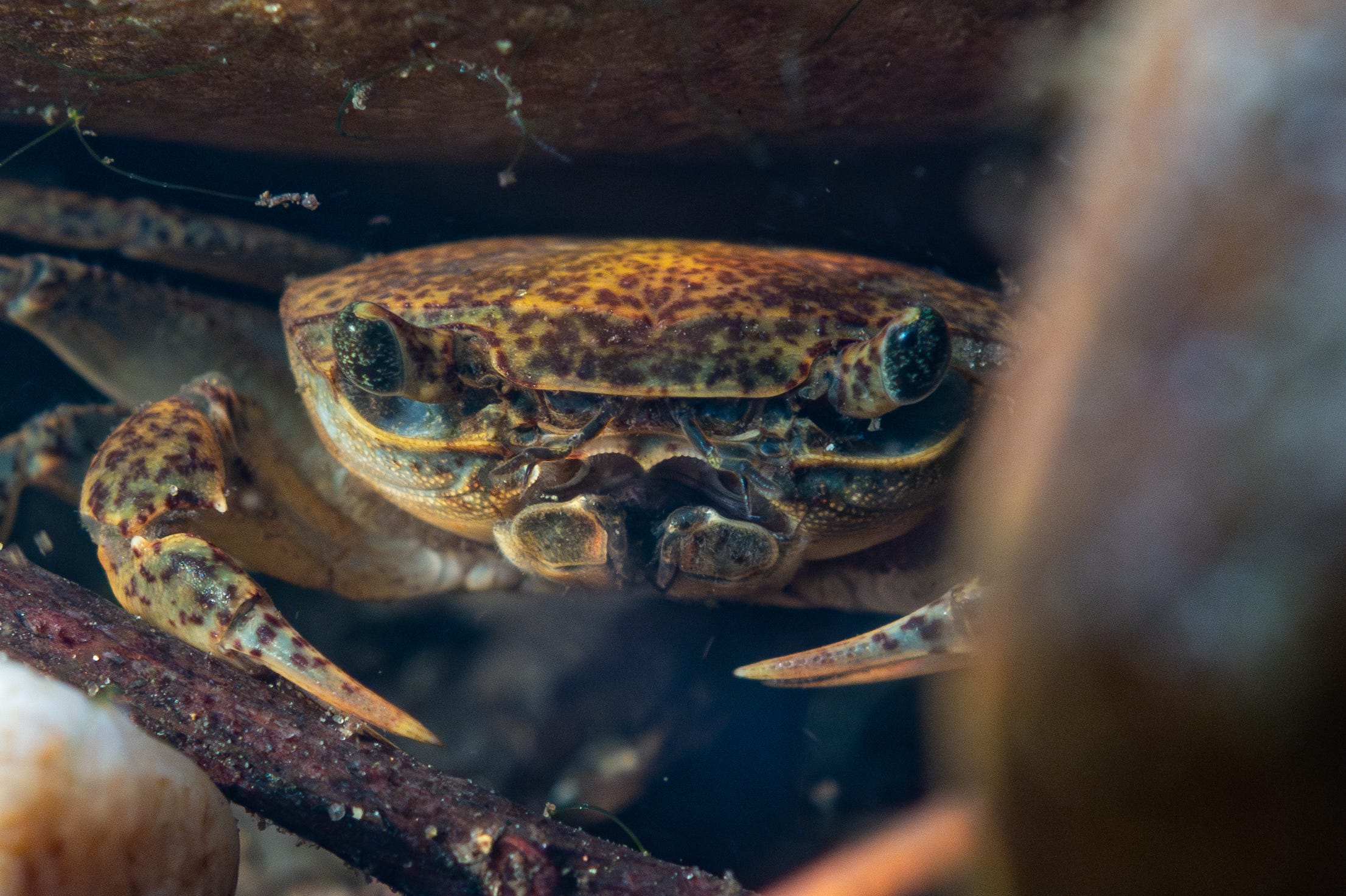
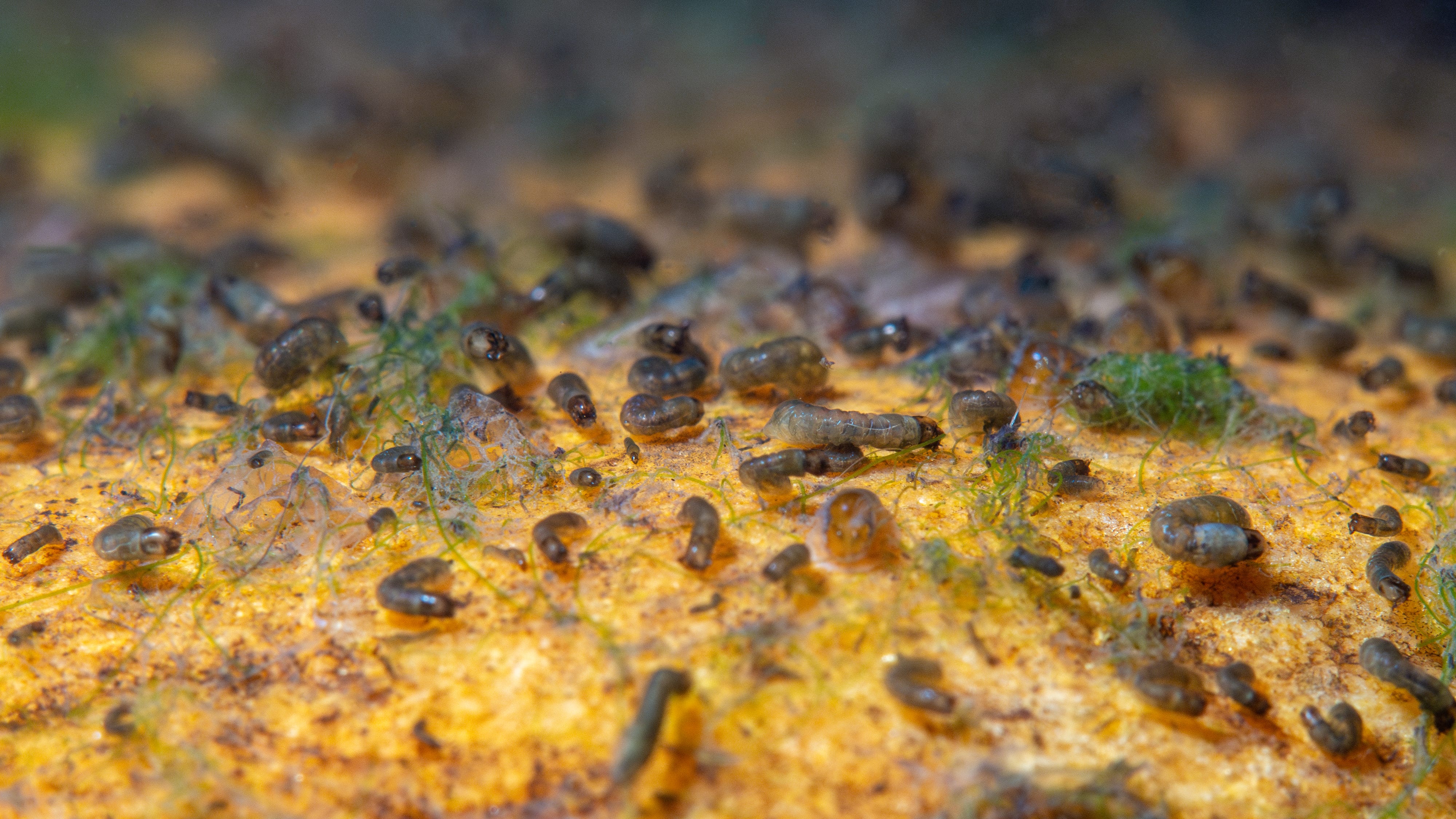
At this point, I had been focusing a lot on calm waters and just climbing over any sections that had a bit of white water. I remembered how, for some species, those turbulent waters are the safest place to be, where the predators won’t go. They can also be quite oxygen-rich with all the aeration. So I find myself some regions of strong flow, and stick my face in (with mask and snorkel) to see what I can find. Most of the time, there was nothing. Eventually, I found life, a bunch of larvae some some sort of insect. How it managed to place its eggs in the water, I have no idea, but the young are there, and they are firmly in place. It was like watching those inflatable tube characters that are dancing. A higher shutter speed was needed for any chance of freezing the action. In hindsight, I should have also done a slow shutter speed image to capture the motion of these larvae.
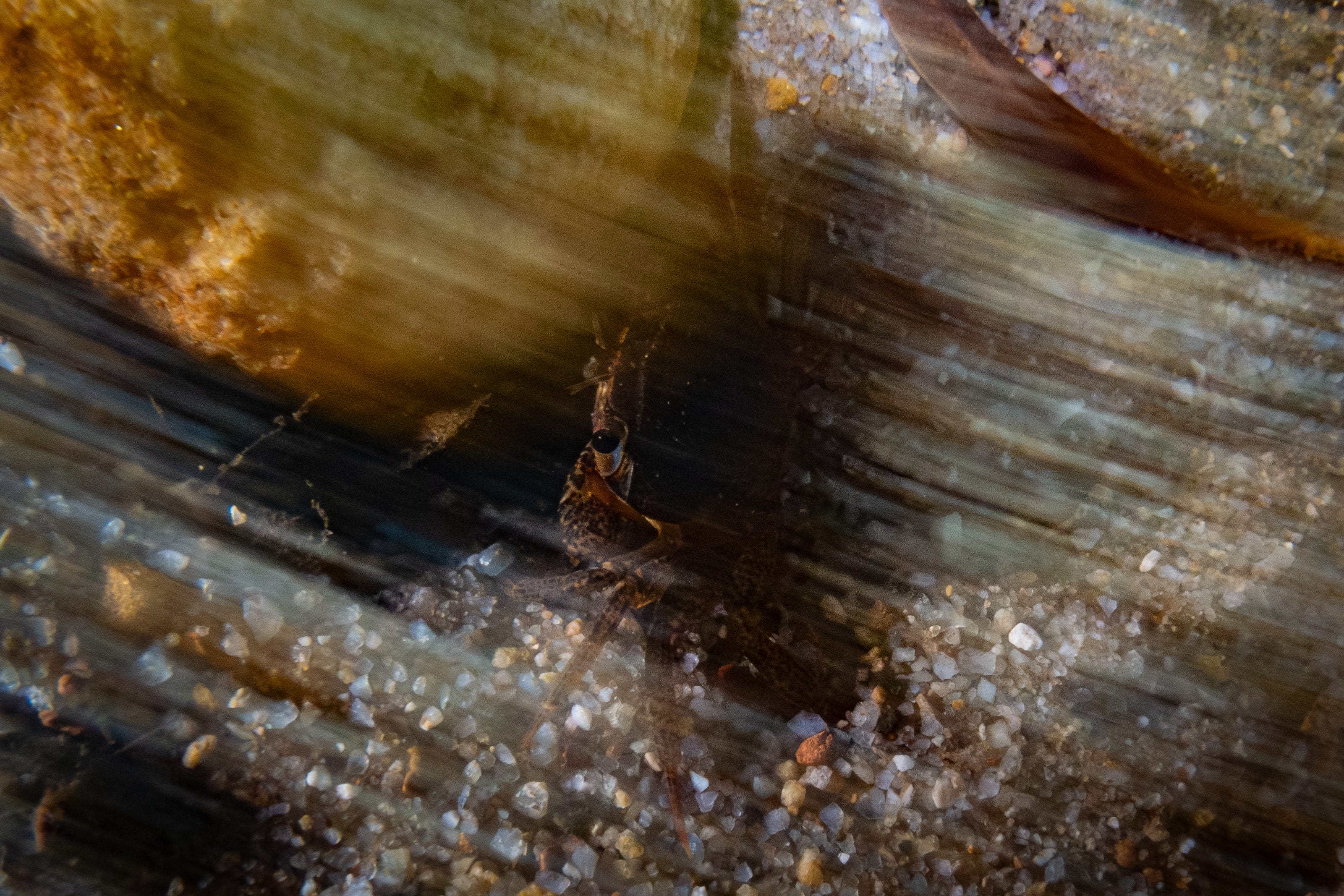
Along with the larvae, I encountered a few crabs, but much smaller than the ones in the calmer sections of the river or pools. I did have the thought to use a slow shutter speed to convey the motion going on this time. I positioned myself directly above a crab hiding among some rocks where some sand and detritus had pooled and set my flash sync to happen on the second curtain. At first, there wasn’t really that much motion as the crab was below where all the aeration was. I incorporated some movement of my own to get the effect of motion happening where the crab was.
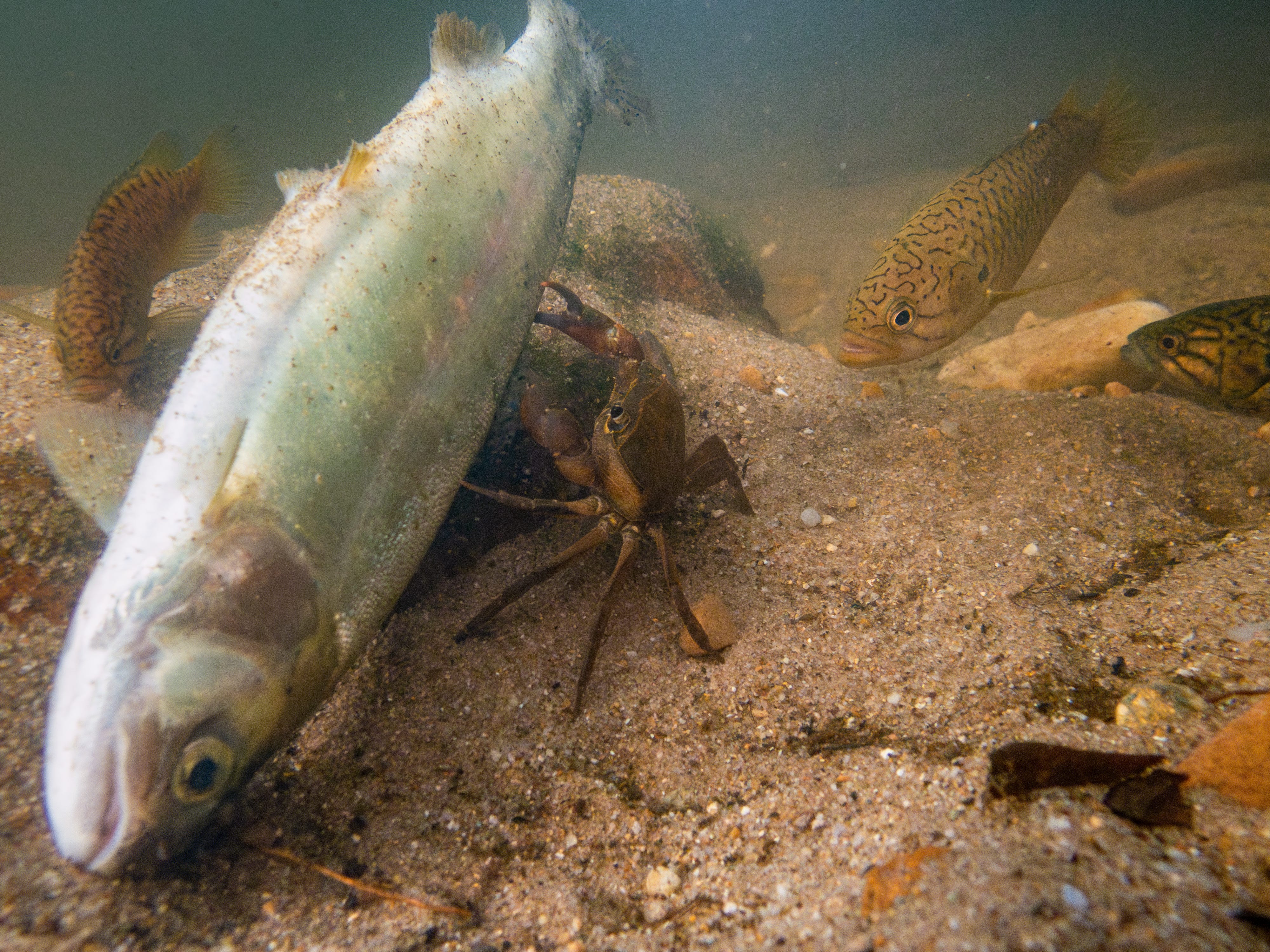
It was cool and all photographing these invertebrates, but what I really wanted was the fish, the initial animals that inspired me to explore the river with my camera. And I was in for an absolute treat. Whilst crawling along the river, I came across a dead trout. Now, on its own, not a great subject for a photo. I wasn’t the only one to find the trout, though. About 7 Cape kurpers (Sandelia capensis) had found it as well, and had already made short work of the fins of the fish, nipping away at the bits of flesh. Whilst photographing the scene in front of me, something I had never expected happened. A cape rock crab burst out from underneath a rock and headed straight for the fish, and started tearing pieces off and eating. The initially startled kurpers became very curious about this intruder and began to inspect. The crab viewed this as a threat and waved a claw at the fish whilst continuing to eat with the other. Eventually, it did get the message and scurried off with both claws raised to dissuade the fish from coming too close.
Now that I had some fish images, I decided I wanted to try and get some split shots. Not the easiest thing to do with a water-based optic. For my Dyron wide-angle lens, there needs to be water between the optic and the lens port of the housing, and water on top for optical performance. The water on the front wasn’t too hard to deal with. The draining of the water from between the optic and the port was quite annoying; often, I would get a line in the middle from where the water was draining. Eventually, I was quick enough to get a picture of the underwater reeds and the reeds above. There is quite a bit of diffraction above, but that’s to be expected a bit, the optic is meant for underwater.
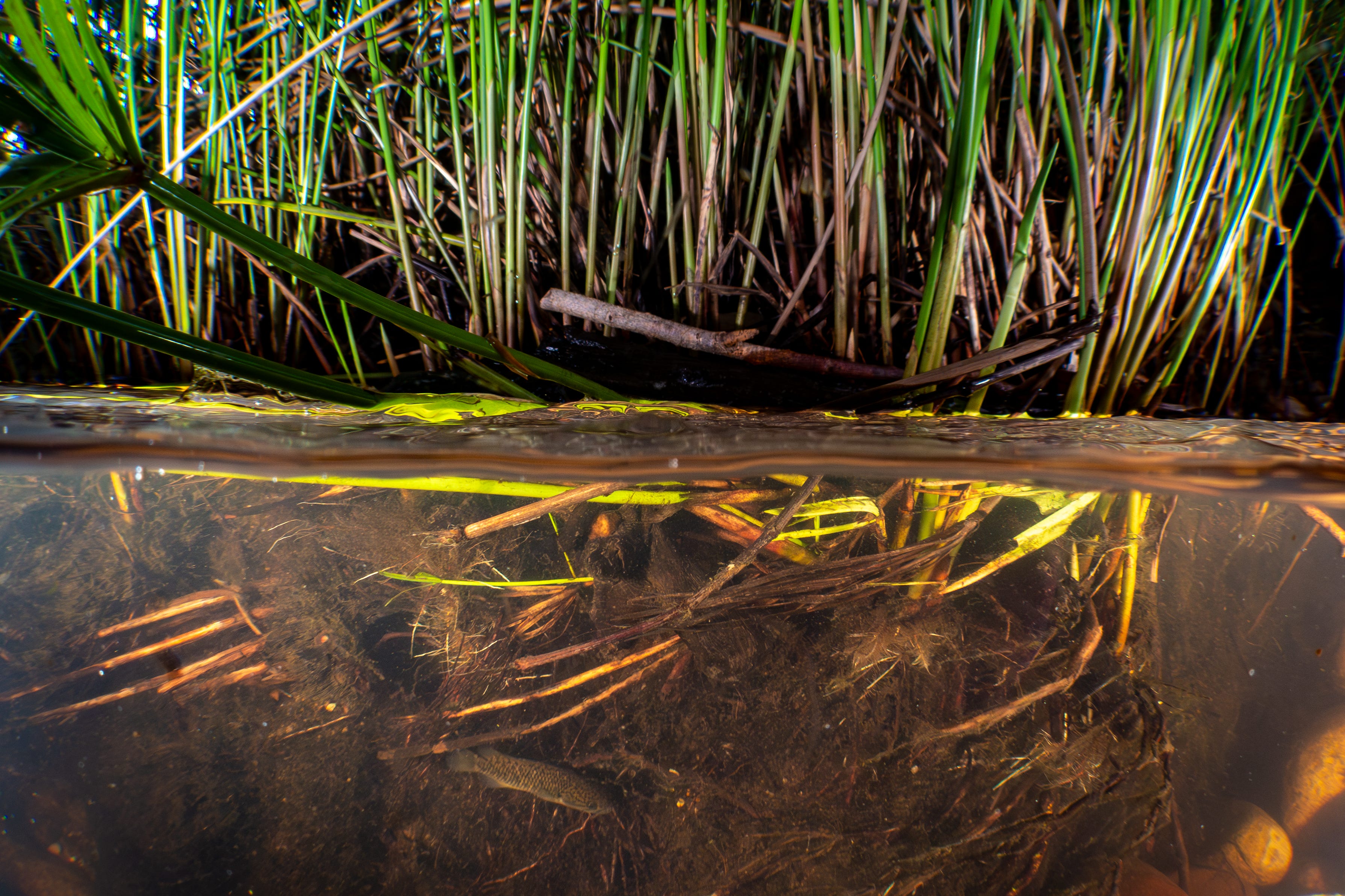
Unbeknownst to me until I started processing these images, I had managed to capture an image of a Cape kurper with the reeds! It was not my intention at all, but I was very happy to see it there.
That concludes my photographic exploration of the Lourens River at the Rodloff Dog Park, a place I intend to visit again and do some more photography.
Best photographer in the business!